
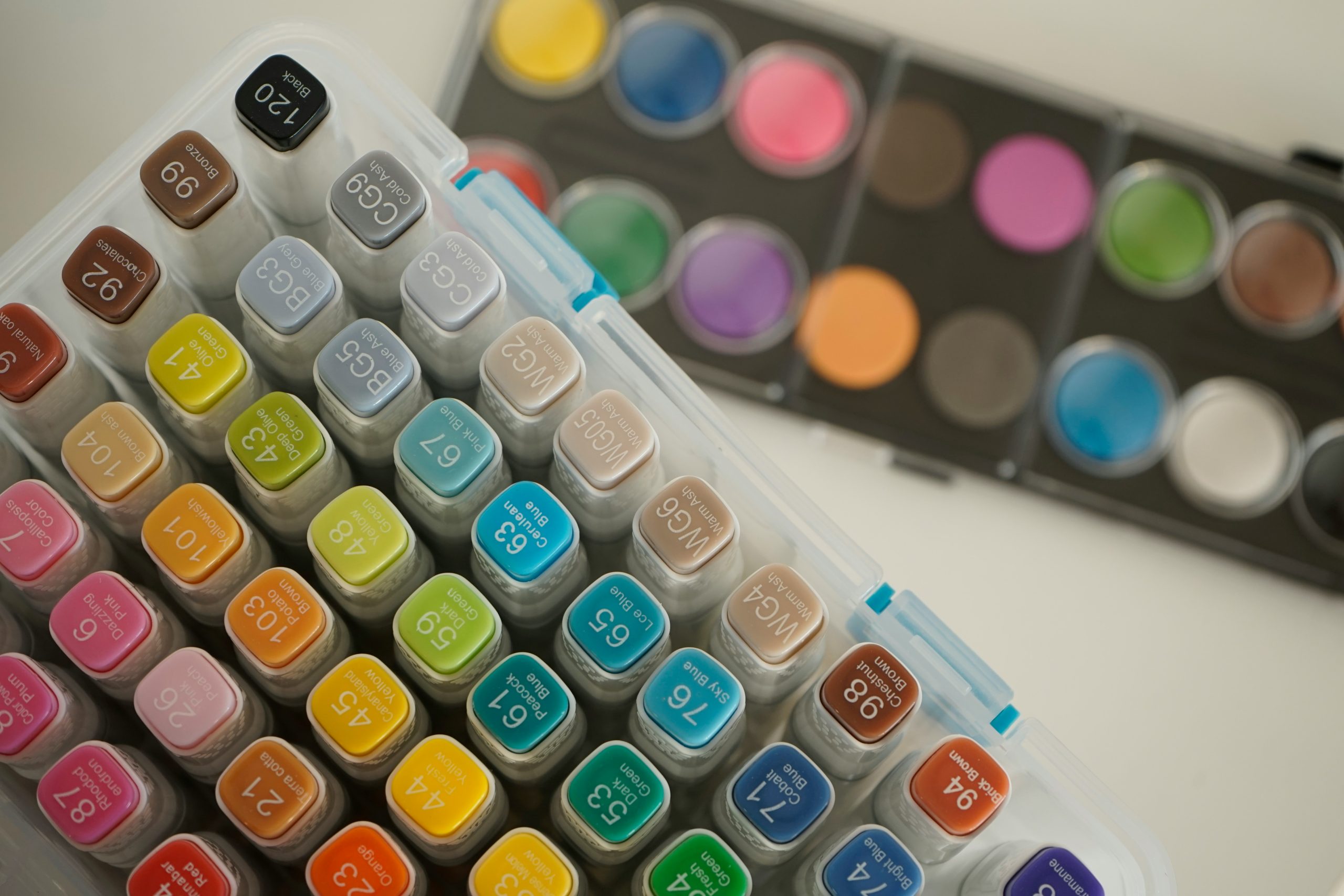
Pick up a set of alcohol markers without doing your research first and you’ll either spend $200 on Copics you’re not ready for, or end up with a cheap set that streaks and dries out in a month. Neither is a great introduction to a medium that’s genuinely worth learning. This guide covers the best alcohol markers for beginners in 2026 — sets that blend well, hold up to regular use, and won’t require a second mortgage. Whether you’re into illustration, manga, or just want to level up your sketchbook work, there’s a solid starting point here.
QUICK COMPARISON TABLE
| Product Name | Best For | Ink Type | Set Sizes Available |
|---|---|---|---|
| Ohuhu Honolulu Brush Markers | Best overall beginner set | Alcohol-based | 48, 60, 104, 120, 168 |
| Copic Ciao Markers | Best step-up / serious beginners | Alcohol-based | 6, 12, 24, 36, 72 |
| Caliart Dual Tip Markers | Best budget pick | Alcohol-based | 51, 100, 121 |
| Arteza EverBlend Markers | Best for color variety on a budget | Alcohol-based | 12, 36, 72 |
| Arrtx ALP Markers | Best for organized starters | Alcohol-based | 36, 66, 80, 90 |
| Shuttle Art Dual Tip Markers | Best ultra-budget starter | Alcohol-based | 24, 50, 89, 121 |
Disclosure: This post may contain affiliate links, which means Pickory may earn a commission at no cost to you.
What to Look for in Alcohol Markers for Beginners
Nib Type: Brush vs. Chisel vs. Fine Tip
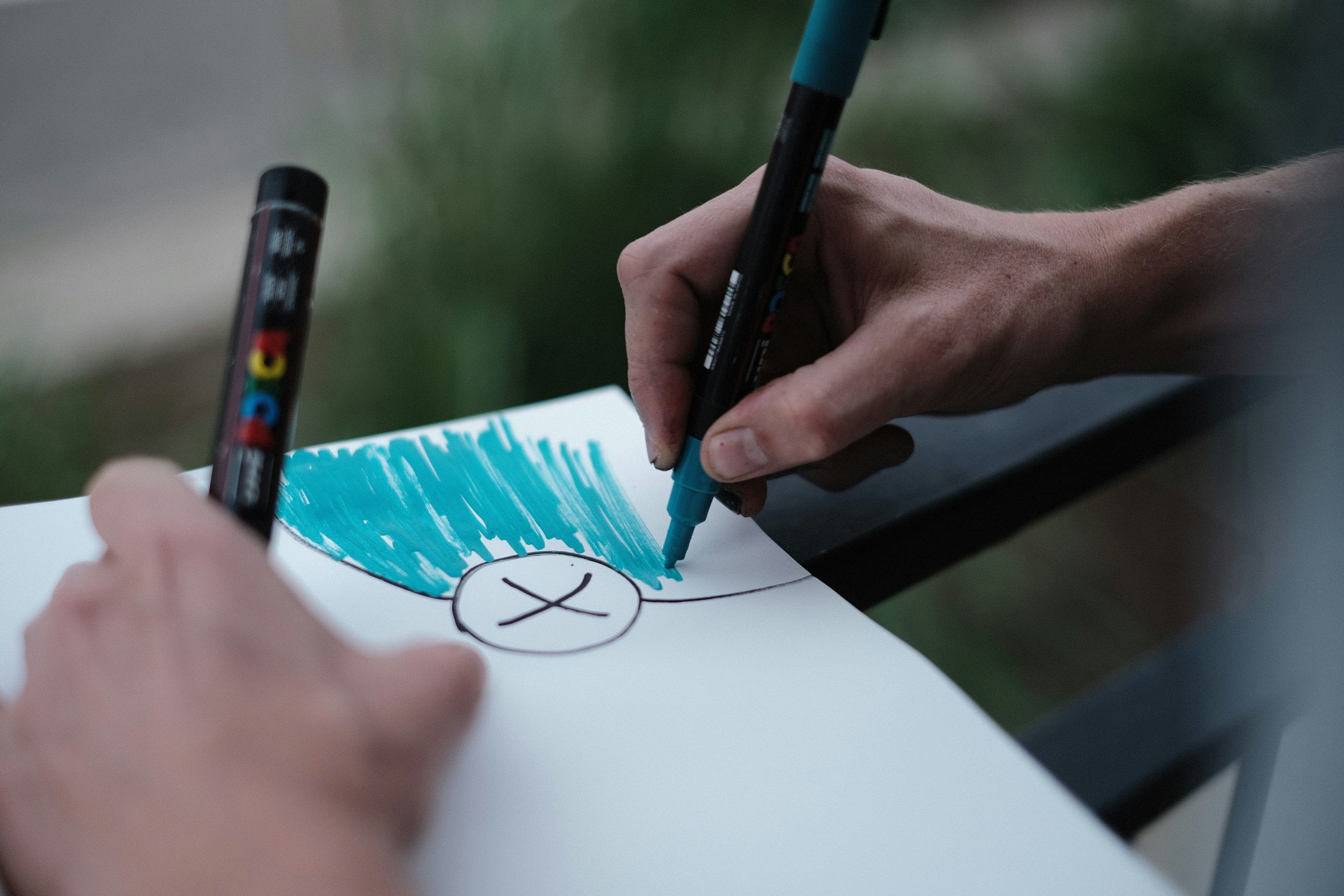
The nib determines how the marker feels to draw with and how well it blends. Brush nibs are flexible and responsive — they’re ideal for blending, varying line weight, and expressive work like illustration or manga. Chisel nibs cover large areas quickly and are better for fills and technical drawing. Fine/bullet tips are stiff and precise, useful for detail work. Most beginner sets include a dual tip with chisel on one end and fine on the other. If blending is your goal, prioritize brush nibs.
Set Size: Don’t Overbuy
Sixty-four colors sounds exciting until you realize you own four slightly different shades of teal and can’t remember which is which. For a first set, 24–48 colors is a sensible range. It forces you to learn color relationships and mixing before you’re managing a hundred-marker collection. Artists in communities like r/Learnart and various marker Facebook groups consistently recommend starting smaller — you can always expand once you know what you actually reach for.
Paper Compatibility
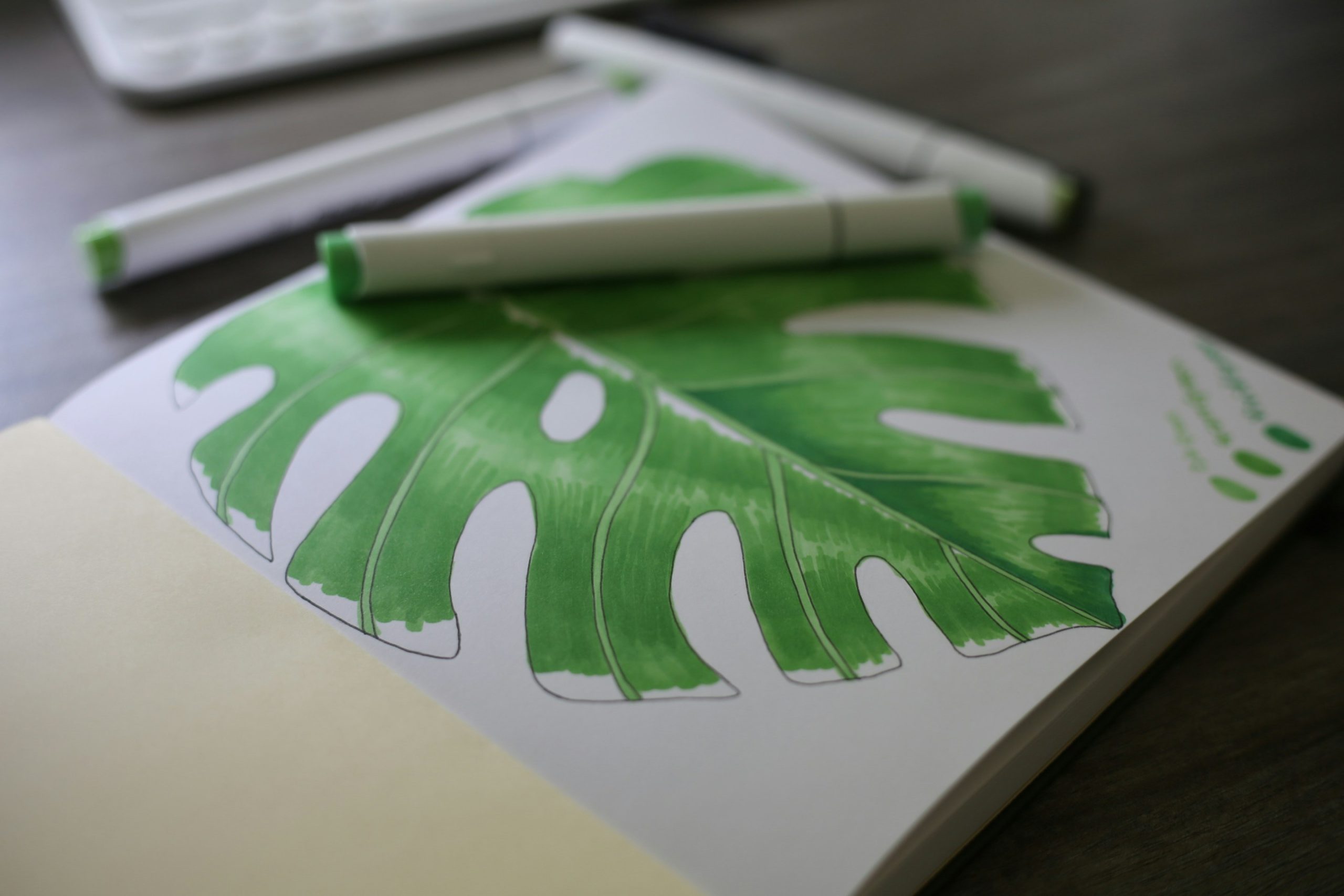
Alcohol markers bleed. That’s not a flaw — it’s how they blend so smoothly — but it means the paper underneath matters a lot. Standard copy paper will bleed straight through. If you’re using a sketchbook, you want something with heavier paper stock, ideally 200gsm or above with a smooth surface. If you’re building out your sketchbook setup alongside your markers, our best paper for alcohol markers and guide to the best sketchbooks for alcohol markers covers which papers hold up to wet media without buckling.
Refillability and Longevity
Budget markers are generally disposable — when they run out, you replace them. That’s fine when you’re starting out and don’t know which colors you’ll use heavily. Premium markers like Copic are refillable and have replaceable nibs, which makes them significantly cheaper in the long run if you use markers regularly. For a beginner, disposable sets make sense. Once you’ve identified your go-to colors after a few months, that’s when refillability starts to matter.
Ohuhu Honolulu Brush Markers — Best Overall for Beginners
Ohuhu has become the default recommendation in nearly every beginner marker community for good reason. The Honolulu series features a brush tip on one end and a chisel on the other, and the blending performance consistently surprises artists who expect budget-tier results. The color range is broad — sets go from 48 colors up to 320 — and the ink dries fast without streaking on appropriate paper. Artists who’ve graduated from Ohuhu to Copics often report that the transition felt natural, which says something about the quality of the foundation Ohuhu builds.
Pros:
- Excellent blending for the price; colors merge smoothly when wet
- Brush tip holds its point well for detail work and expressive line variation
- Wide set size range lets you start small and expand in the same line
Cons:
- Brush tips can fray with heavy use over time
- Lighter/pale colors are more limited compared to professional brands
Copic Ciao Markers — Best Step-Up Pick for Serious Beginners
Copic is the professional standard that every other brand gets compared to, and the Ciao line is the most accessible entry point. The barrels are smaller than the flagship Copic Sketch, which means less ink per marker — but the nib quality, blending performance, and refillability are identical. If you’ve tried a budget set and found yourself wanting more from the medium, a 12 or 36-color Ciao set is a meaningful upgrade. The colors are consistent, lightfast, and available individually so you’re never stuck buying a full set just to replace one shade.
Pros:
- Industry-leading blending and color consistency
- Fully refillable with replaceable nibs — a long-term investment
- Individual colors available, so you only buy what you need
Cons:
- Significantly more expensive per marker than budget alternatives
- Smaller ink reservoir than Copic Sketch markers
Caliart Dual Tip Markers — Best Budget Pick
For artists who want to experiment with alcohol markers before committing real money to the medium, Caliart is the most commonly recommended gateway set. The 100-color set includes bold, saturated colors with dual tips — chisel and fine — and the price per marker is among the lowest available. Blending is workable but less seamless than Ohuhu; where Caliart earns its reputation is giving you a wide palette to explore without much financial risk. Artists who aren’t sure if markers will stick as a medium regularly start here.
Pros:
- Very low cost per marker makes it easy to experiment freely
- 100 colors gives broad palette coverage for the price
- Dual tips cover both detail work and area fills
Cons:
- Blending is less smooth than Ohuhu or premium brands
- Ink can feel less consistent across the color range
Arteza EverBlend Markers — Best for Color Variety on a Budget
Arteza’s EverBlend line sits a step above ultra-budget markers while staying well under Copic pricing. The dual brush/chisel tip setup is well-liked by beginners who want to practice blending techniques, and the 72-color set in particular gets consistent praise for its range of skin tones and natural colors — useful for portrait and character work. Artists working through sketchbooks report that the ink performs reasonably well on heavier paper stocks. If you’re drawn to illustration or character design specifically, the EverBlend palette is well-considered for that use case.
Pros:
- Brush tip performs well for blending and gradient work
- Strong skin tone and natural color selection for portraiture
- More consistent ink quality than entry-level budget brands
Cons:
- Less widely available for replacement than Ohuhu
- Larger sets can feel redundant in color selection
Arrtx ALP Markers — Best for Organized Starters
Arrtx markers come packaged in a case with individual labeled slots for each marker — a small detail that makes a real difference when you’re new and still learning which colors you’re reaching for. The ALP series offers brush and chisel tips, solid blending, and a color range that goes up to 206. Artists in beginner communities frequently mention Arrtx as an Ohuhu alternative worth considering, particularly for those who find the Ohuhu color naming system harder to navigate. The build quality on the barrels is good, and the set holds up well with regular use.
Pros:
- Organized carrying case with individual slots makes color selection much easier
- Brush tip blending is competitive with Ohuhu
- Available in sets up to 206 colors for room to grow
Cons:
- Less brand recognition than Ohuhu means fewer community tutorials referencing specific colors
- Color range not as extensive at the top end
Shuttle Art Dual Tip Markers — Best Ultra-Budget Starter
Shuttle Art is the entry point for artists who want to try alcohol markers with minimal financial commitment — their 48-color set regularly comes in under $20. The tradeoff is blending performance: Shuttle Art markers work, but they’re noticeably less smooth than Ohuhu, and the color consistency is more variable. Where they earn a place on this list is for the artist who genuinely isn’t sure they’ll stick with markers and wants to find out cheaply. If you’re pairing these with a sketchbook, heavier paper is especially important — the ink is thinner and bleeds more readily than mid-range brands.
Pros:
- Lowest price point on this list — very low barrier to entry
- Dual tips cover both broad fills and detail lines
- Wide color selection for the price
Cons:
- Blending is noticeably less smooth than Ohuhu or Arrtx
- Ink consistency varies across colors in the set
Frequently Asked Questions
What’s the best brand of alcohol markers for beginners?
Ohuhu is the most consistently recommended starting point across artist communities in 2026. The Honolulu brush series delivers blending performance that punches well above its price point, and the range of set sizes means you can start with 48 colors and expand without switching brands. For beginners willing to spend a bit more from the start, a small Copic Ciao set is worth considering — the refillable system means the investment compounds over time rather than depleting it.
Do alcohol markers bleed through paper?
Yes — alcohol markers are designed to saturate the paper fiber, which is what gives them their blending quality. That same property means they’ll bleed through thin paper like standard copy paper or lightweight sketchbook pages. For marker work, you want smooth, heavier paper — 200gsm and above is a good benchmark. Bristol paper is a popular choice. If you’re working in a sketchbook, placing a scrap sheet beneath your page protects the next leaf.
How many colors do I need to start with?
Most experienced artists recommend starting with 24–48 colors. That range is large enough to cover warm and cool tones across the spectrum while still being manageable to learn. It also forces useful constraints — you’ll learn to layer and blend to create new colors rather than relying on having exactly the right shade in hand. Once you’ve been using your first set for a few months and know which colors you deplete fastest, expanding becomes a much more intentional decision.
Final Verdict
For most beginners, Ohuhu Honolulu Brush Markers are the right call — the blending performance is genuinely good, the sets are well-priced, and there’s enough color range to grow into. Start with the 48 or 72-color set before committing to a larger collection. If your budget is tight and you’re still deciding whether markers will stick, the Caliart 100-color set is a reasonable way to find out cheaply. If you already know you’re serious about the medium, a small Copic Ciao starter set is a smarter long-term investment than multiple rounds of budget replacements. Check current prices on Amazon before buying — sets go on sale regularly.
Leave a Reply