
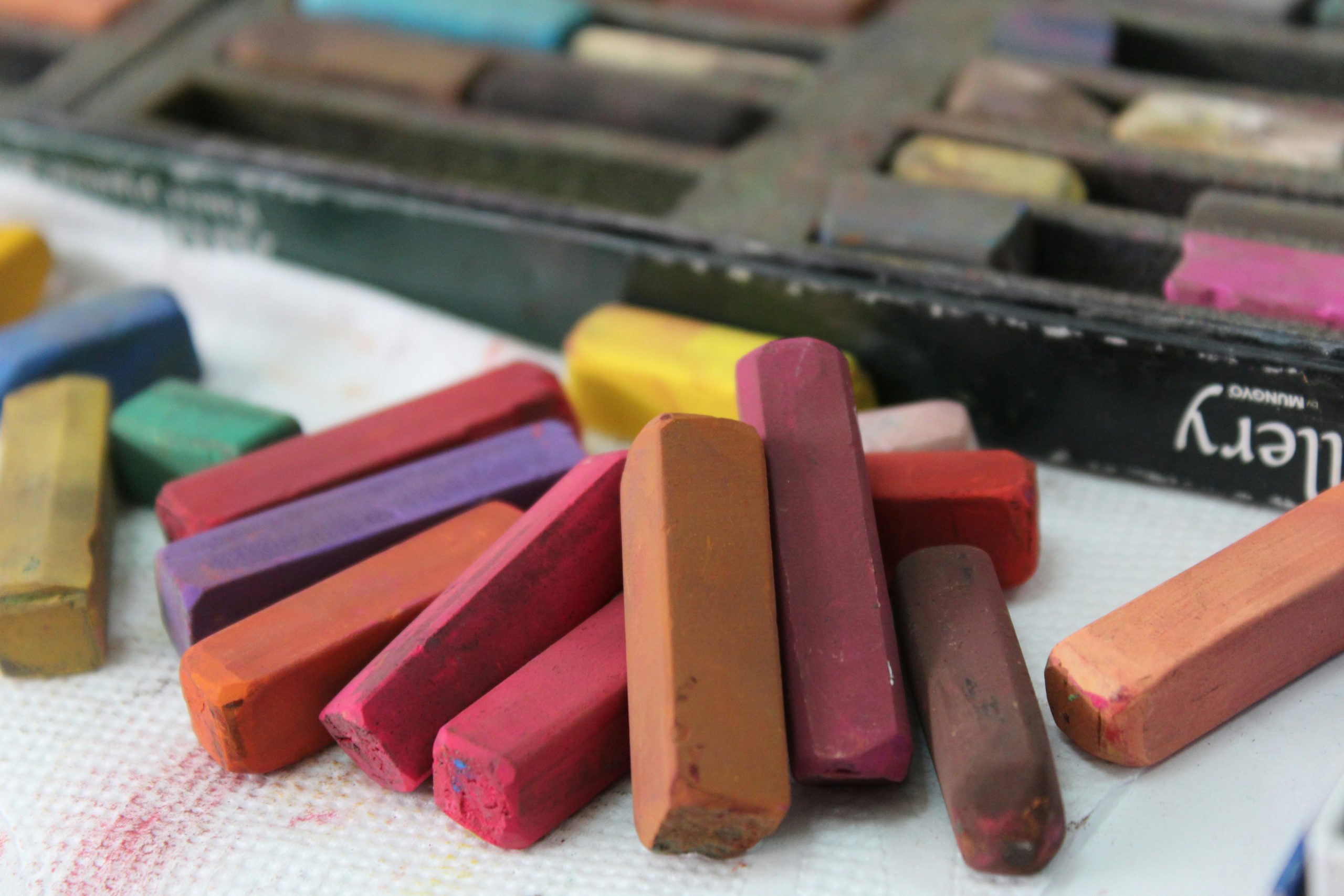
Standing in the art supply aisle (or scrolling Amazon at midnight) trying to decide between oil pastels and soft pastels is a specific kind of overwhelm — they look similar in the package but behave completely differently in your hand. If you’ve picked the wrong one, you already know: soft pastels crumble to dust if you expected oil pastel richness, and oil pastels feel sticky and stubborn if you wanted the powdery blend of soft pastels. This guide breaks down exactly how oil pastels vs soft pastels differ, so you buy the one that matches how you actually want to work — not the one that looked nicest in the box.
QUICK COMPARISON: OIL PASTELS VS. SOFT PASTELS
| Factor | Oil Pastels | Soft Pastels |
|---|---|---|
| Texture | Waxy, buttery, pigment bound in oil/wax | Powdery, chalky, pigment bound in gum |
| Blending | Blends with fingers, blending stumps, or solvents | Blends with fingers, blending stumps, or brushes |
| Mess level | Low — no dust, but can smear on hands and surfaces | High — sheds fine pigment dust constantly |
| Layering | Good, but colors can get muddy if overworked | Excellent — layers cleanly, colors stay vibrant |
| Paper needs | Works on most heavier papers, some tooth helpful | Needs textured or sanded paper to hold pigment |
| Fixative needed | No | Yes, to prevent smudging after finishing |
| Best for | Bold, graphic work; beginners who dislike mess | Soft blending, realistic shading, atmospheric work |
| Learning curve | Lower — more forgiving, harder to “ruin” a piece | Steeper — technique-dependent, easy to overblend |
Disclosure: This post may contain affiliate links, which means Pickory may earn a commission at no cost to you.
What to Look for When Choosing Between Oil Pastels and Soft Pastels
How You Like to Blend
Oil pastels blend by pushing pigment around — with a finger, a blending stump, or a bit of solvent like baby oil for a painterly effect. Soft pastels blend by lifting and softening dry pigment, closer to how you’d work with powdered makeup. If you enjoy a slower, more controlled build-up of tone, soft pastels reward that patience. If you want immediate, visible color mixing with less technique required, oil pastels are more forgiving.
Your Tolerance for Mess
This is the factor beginners underestimate most. Soft pastels shed pigment dust with every stroke — it gets on your hands, your desk, and floats into the air if you’re not careful. Oil pastels are comparatively clean since the pigment stays bound in the stick, though they can smear on your hands and transfer if you rest your palm on finished work. If you’re working at a shared table, on a couch, or don’t want to deal with cleanup, oil pastels are the lower-friction starting point — our guide to the best oil pastels for beginners goes deeper on set sizes and brand picks if you land here.
Paper and Surface Requirements
Soft pastels need real tooth to grip onto — sanded pastel paper or a heavily textured surface is close to mandatory, since the pigment just slides off smooth paper. Oil pastels are more flexible and work reasonably well on mixed media paper, cardstock, or even canvas, though the right surface still makes a noticeable difference — our guide to the best paper for oil pastels covers which options grip pigment best across multiple layers. If you’re also figuring out sketchbook and paper choices for other mediums, our guide to the best sketchbooks for beginners covers which paper weights hold up across different art supplies.
Cost of Getting Started (and Staying With It)
Entry-level sets of both mediums are inexpensive, but the ongoing cost differs. Soft pastels require sanded paper (pricier than standard drawing paper) and fixative spray as recurring purchases. Oil pastels need less specialty paper and no fixative, which keeps the total cost of a hobby lower if you’re still deciding whether pastel work is something you’ll stick with.
Best Oil Pastels to Try
Mungyo Gallery Oil Pastels — Best Overall
Check current price: Amazon | Blick
Mungyo’s Gallery line is a consistent recommendation across beginner art communities for a reason — the pastels are genuinely soft and blendable straight out of the box, without the waxy resistance that makes cheaper oil pastels frustrating to work with. The pigment saturation holds up well for the price point, and the range of set sizes makes it easy to start small and expand later.
Pros:
- Soft, blendable texture that doesn’t fight you
- Strong pigment saturation for the price
- Available in set sizes from 12 to 48+ colors
Cons:
- Wrappers can be flimsy and tear with frequent use
- Colors run slightly lighter than swatches suggest
Sennelier Oil Pastels — Best Step-Up Pick
Check current price: Amazon | Blick
Sennelier is the professional-grade option most soft-oil-pastel artists eventually reach for, and it’s worth the jump once you know you like the medium. The pigment-to-binder ratio is noticeably richer, which means more vibrant color and smoother blending, especially for layering techniques that start to look muddy with student-grade sticks.
Pros:
- Exceptional pigment richness and blendability
- Holds up well to layering without turning muddy
- Long-standing reputation among professional pastel artists
Cons:
- Significantly more expensive than student-grade options
- Softer texture means sticks wear down faster
Crayola Oil Pastels — Best Ultra-Budget Starter
Check current price: Amazon | Blick
These are the pastels most people already have lying around, and they’re a genuinely reasonable way to test whether oil pastel work appeals to you before spending more. They’re firmer and less blendable than the Mungyo or Sennelier options, so expect more visible strokes and less smooth transitions — but for sketching, layering practice, or working with kids, they hold up fine.
Pros:
- Extremely accessible and inexpensive
- Fine for practicing technique before upgrading
- Widely available in stores, not just online
Cons:
- Firmer, waxier texture that resists blending
- Limited color range compared to artist-grade sets
Best Soft Pastels to Try
Mungyo Gallery Soft Pastels — Best Overall
Check current price: Amazon | Blick
Mungyo’s soft pastel line mirrors their oil pastel reputation — reliable pigment quality at a price that doesn’t punish you for still learning. The sticks are soft enough to blend easily but hold their shape better than some ultra-soft premium brands, which makes them more forgiving for a first set.
Pros:
- Good balance of softness and stick durability
- Strong color range for the price
- Beginner-friendly without feeling like a “toy” product
Cons:
- Produces more dust than firmer pastel brands
- Half-stick sizes can be awkward to hold for detail work
Rembrandt Soft Pastels — Best Step-Up Pick
Check current price: Amazon | Blick
Rembrandt sits in the sweet spot between student and professional grade — the pigment load is noticeably higher than entry sets, and the sticks are formulated to hold together better under blending, which reduces the crumble-and-waste problem that frustrates people moving up from budget pastels.
Pros:
- Higher pigment concentration than student-grade sets
- Sticks hold together well during blending
- Broad, well-organized color range by value and tone
Cons:
- Pricier per stick than budget alternatives
- Still requires sanded paper to perform well
Sakura Cray-Pas Specialist Soft Pastels — Best Ultra-Budget Starter
Check current price: Amazon | Blick
This is a low-stakes way to find out if you enjoy soft pastel blending before investing in a premium set and sanded paper. Expect more chalkiness and less vibrant layering than the pricier options, and be ready for a dustier working experience — but as a first set to learn hand position and blending motion, it does the job.
Pros:
- Low-cost entry point into soft pastel work
- Fine for learning basic blending technique
- Compact sets are easy to store and travel with
Cons:
- Less pigment vibrancy than mid-range brands
- Sticks break and crumble more easily
Frequently Asked Questions
Can you mix oil pastels and soft pastels in the same piece?
Yes, and it’s a common technique — many artists lay down soft pastel as a base for soft, atmospheric color, then add oil pastel on top for bold accents or texture. The reverse (soft pastel over oil pastel) doesn’t work well, since the waxy oil pastel surface repels the powdery pigment.
Do oil pastels or soft pastels work better for beginners?
Oil pastels are generally the easier starting point — they’re less messy, more forgiving of technique mistakes, and don’t require special paper or fixative to get a decent result. Soft pastels have a steeper learning curve but reward that effort with smoother blending and more realistic shading once you’ve built the technique.
How many pastels do I need to start with?
A set of 24 colors is a practical starting point for either medium — enough range to mix believable skin tones, skies, and shadows without the expense of a 100+ color set you haven’t earned the technique to use yet. Expand toward larger sets once you find yourself repeatedly wishing for a color you don’t have.
Final Verdict
For most beginners, oil pastels are the easier entry point — they’re less messy, require no special paper or fixative, and are more forgiving if your blending technique isn’t dialed in yet. Start with a Mungyo Gallery Soft Oil Pastels set before committing to premium Sennelier sticks. If you’re drawn to soft, realistic shading and don’t mind the dust and paper requirements, soft pastels are worth learning — the Sakura Cray-Pas Specialist set is a cheap way to find out before buying sanded paper and a full Rembrandt set. Check current prices on Amazon and Blick before buying — art supply pricing shifts often enough that it’s worth a quick comparison at checkout.
Leave a Reply