
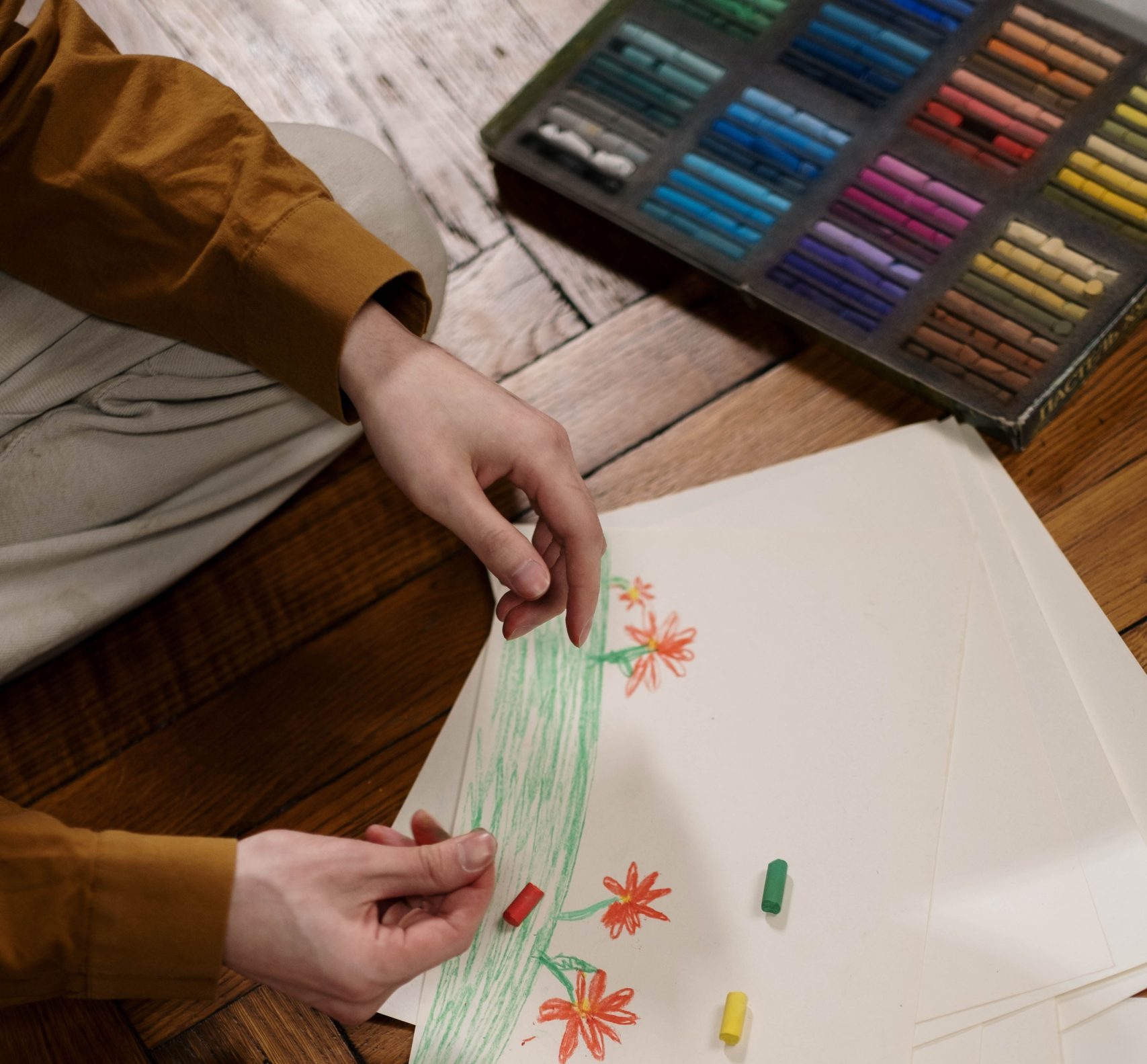
Oil pastels will mark almost any surface — which makes choosing paper feel optional. It is not. The wrong paper fills up after one layer, causes blending to turn patchy, or buckles under the pressure of working wet-on-dry. The right paper grips pigment across multiple layers, holds up to finger blending, and keeps colors looking vivid for years.
This guide covers the most important things to know before buying, plus the top paper picks for beginners and more experienced artists alike.
What Makes a Paper Good for Oil Pastels
Tooth (Surface Texture)
Tooth is the slight roughness of the paper surface that gives oil pastel pigment something to grip. Too smooth, and the stick skates across the page, depositing thin color that slides when you add a second layer. Too rough (like coarse sandpaper), and the pastel breaks down quickly without adding much visual payoff.
For most artists, a medium tooth hits the sweet spot — enough texture to hold two to five layers of color without eating through sticks prematurely. Cold-press watercolor paper, dedicated pastel paper, and mixed-media paper all fall in this range.
Weight (GSM)
GSM stands for grams per square meter and measures paper thickness. For oil pastels, 160 gsm is the practical minimum. Below that, paper tends to buckle from the pressure of blending and may tear when working over built-up areas. For finished work intended for display, 200–300 gsm is a better target.
A quick reference:
- 160 gsm — Minimum for oil pastels; good for practice and sketchbook work
- 200–240 gsm — Solid choice for finished work
- 300 gsm+ — Premium surface; handles heavy layering, solvent blending, and mixed media
Acid-Free Construction
Acid-free paper has a neutral or slightly alkaline pH that prevents the paper from yellowing or becoming brittle over time. If you plan to keep or display finished work, acid-free paper is not optional.
Toned vs. White
White paper shows oil pastel colors brightly and works well for most subjects. Toned paper — warm tan, gray, ochre, or muted blue — lets you use the paper itself as a mid-value, which speeds up work on portraits, landscapes, and moody subjects. Many pastel pads include assorted tones for this reason.
Best Paper for Oil Pastels
| Paper | Best For | Weight | Surface |
|---|---|---|---|
| Canson Mi-Teintes | All-around best | 160 gsm | Dual-texture |
| Clairefontaine Pastelmat | Serious layering | 360 gsm | Sanded |
| Strathmore 400 Series Pastel Pad | Budget/practice | 118 gsm | Lightly textured |
| Cold-press watercolor paper (300 gsm) | Versatile surface | 300 gsm | Cold-press texture |
| SoHo Urban Artist Pastel Pad | Painterly/canvas feel | 300 gsm | Fine canvas texture |
Affiliate disclosure: As an Amazon Associate, Pickory earns from qualifying purchases.
1. Canson Mi-Teintes — Best Overall
Canson Mi-Teintes is the most recommended pastel paper across beginner and intermediate artists. It comes in a 9×12 pad of 24 sheets at 160 gsm, with 50% cotton content and gelatin sizing that makes it noticeably more durable than standard paper at the same weight.
The standout feature is its dual-texture design: one side has heavier tooth for bold, layered work; the other is lighter for softer blending and more controlled marks. The pads come in assorted earth tones or neutrals, which work especially well for oil pastel subjects like portraits and still lifes.
At 160 gsm it sits at the lower end of the weight range, but the cotton content compensates — it holds up well to finger blending and multiple layers without pilling or tearing.
Best for: Beginners who want quality paper without a steep price increase. Artists who want one pad that handles multiple techniques.
2. Clairefontaine Pastelmat — Best for Heavy Layering
Pastelmat is a different category of paper. At 360 gsm, it is thick enough to take solvents and water-based media without warping. The surface is sanded — not aggressively rough, but with enough grip to hold many more layers than standard pastel paper before filling up.
The sanded surface is especially useful for artists who blend with solvents or want to build color intensity through repeated layers. It also allows for easier corrections — pigment can be lifted or reworked more cleanly than on standard paper. Crystal paper sheets between pages protect finished work from smudging.
The trade-off is cost. Pastelmat runs higher than general pastel pads, which makes it better suited for finished pieces than everyday practice.
Best for: Artists who build up multiple layers, use solvents to blend, or want a premium surface for display-worthy work.
3. Strathmore 400 Series Pastel Pad — Best for Practice
The Strathmore 400 Series is the most accessible entry point. It comes in a 9×12 tape-bound pad of 24 assorted-color sheets at 118 gsm (80 lb). It is acid-free and widely available at major art retailers.
Worth noting: 118 gsm is below the 160 gsm minimum most pastel artists recommend for oil pastels specifically. The paper works for light applications and practice, but heavy blending or multiple thick layers can cause the tooth to fill quickly. For beginners testing pressure and color mixing before investing in heavier paper, it is a reasonable starting point. For finished work, step up in weight.
Best for: Beginners on a tight budget, practice sessions, and testing color combinations.
4. Cold-Press Watercolor Paper (300 gsm) — Most Versatile
Cold-press watercolor paper is one of the most practical surfaces for oil pastels that most beginners overlook. The cold-press texture gives enough tooth for solid pigment adhesion, and at 300 gsm it handles heavy blending, finger work, and even light solvent use without buckling or tearing.
It also opens up mixed-media possibilities — watercolor washes as underpainting, ink line work, or pencil details all work on the same surface. Brands like Fabriano Artistico, Canson XL Watercolor, and Arches are all solid options. A full sheet can be cut to size, making it cost-effective.
The surface is slightly smoother than dedicated pastel paper, which keeps edges cleaner and suits botanical illustration, floral work, and tight details better than heavy expressive blending.
Best for: Artists who want a versatile surface for oil pastels and mixed media. Anyone who already has watercolor paper and wants to try it with oil pastels.
5. SoHo Urban Artist Pastel Pad — Best for a Painterly Look
The SoHo Urban Artist pad features a fine canvas texture on 300 gsm paper, giving it a surface that mimics stretched canvas more closely than standard pastel paper. The tooth is strong enough to hold dense color and facilitate smooth blending, while glassine interleaving between sheets protects finished work during storage or transport.
The canvas-like texture creates a characteristic broken-stroke effect with dry oil pastel marks — more expressive and less even than the flat coverage you get on smoother paper. That quality suits loose, painterly work well, but may feel uncontrolled for anyone used to more uniform coverage.
Best for: Artists who prefer a painterly, expressive style. Plein air or travel work where the glassine interleaving and durable surface matter.
Surface Types at a Glance
Beyond dedicated pastel paper, several surfaces work reliably with oil pastels:
Mixed-media paper (160 gsm+): A practical all-rounder. Holds oil pastels, pencil, and light water media. Good for sketchbook work and studies.
Canvas paper: Strong tooth and a woven texture. Gives a distinctly painterly result. Can exaggerate broken strokes — intentional for some styles, disruptive for others.
Sanded pastel paper: Maximum grip. Holds the most layers and allows the most reworking. Premium price. Not necessary for beginners.
Regular printer paper: Skip it. It tears under blending pressure and the tooth is too smooth for more than a single light layer.
What to Avoid
- Glossy paper: Pigment sits on the surface and smears; layers cannot build
- Printer or copy paper: Too thin, no tooth; acceptable only for quick color tests
- Very coarse sandpaper: Burns through sticks rapidly with little additional benefit for most artists
- Paper below 130 gsm for finished work: Too prone to buckling and tearing under repeated blending
Frequently Asked Questions
Can you use regular sketchbook paper for oil pastels? Standard sketchbook paper (usually 90–110 gsm) is thin for oil pastels and will buckle under blending pressure. It works for quick sketches and testing colors, but not for finished work.
Is watercolor paper good for oil pastels? Yes. Cold-press watercolor paper at 200–300 gsm is one of the most practical surfaces for oil pastels, especially for beginners who already have it on hand. Hot-press (smooth) watercolor paper also works but fills faster.
Do you need special paper for oil pastels? Not necessarily — oil pastels will mark many surfaces. But paper with appropriate weight and texture produces noticeably better results: richer layering, cleaner blending, and work that holds up over time.
What weight paper is best for oil pastels? 160 gsm is the practical minimum for most oil pastel work. For finished pieces or heavy blending sessions, 200–300 gsm is a better choice.
Can you use oil pastel paper for soft pastels too? Most papers marketed for oil pastels also work with soft and hard pastels. Canson Mi-Teintes and the Strathmore 400 Series are both labeled for all pastel types.
Final Verdict
For most beginners, Canson Mi-Teintes is the right starting point. The dual-texture surface, cotton content, and assorted toned give you more to work with than a standard paper pad at the same price point, and it handles oil pastels reliably across multiple layers.
If you’re on a tight budget and mostly practicing, the Strathmore 400 Series works — just know the 118 gsm weight is on the light side and you’ll feel it during heavy blending sessions.
If you’re ready to invest in a surface for finished, display-worthy work, Clairefontaine Pastelmat is worth the step up. The sanded surface and 360 gsm weight handle everything a beginner’s pad cannot.
And if you already have cold-press watercolor paper in your studio, try it before buying anything else — 300 gsm cold-press is one of the most capable oil pastel surfaces available and costs nothing extra if you have it on hand.
Looking to pair your paper with the right oil pastels? See the Best Oil Pastels for Beginners guide.
Leave a Reply